The NCAA Men's Division I Basketball Tournament, universally known as March Madness, is an annual spectacle that grips sports fans with its unparalleled drama, improbable upsets, and the relentless pursuit of a national championship. It’s a single-elimination crucible where 68 teams battle, dreaming of becoming a "Cinderella story" that defies all expectations. While bracketologists meticulously analyze team matchups and statistical probabilities, one enduring question often sparks debate and fuels hope for the underdog: What is the lowest seed to ever win March Madness?
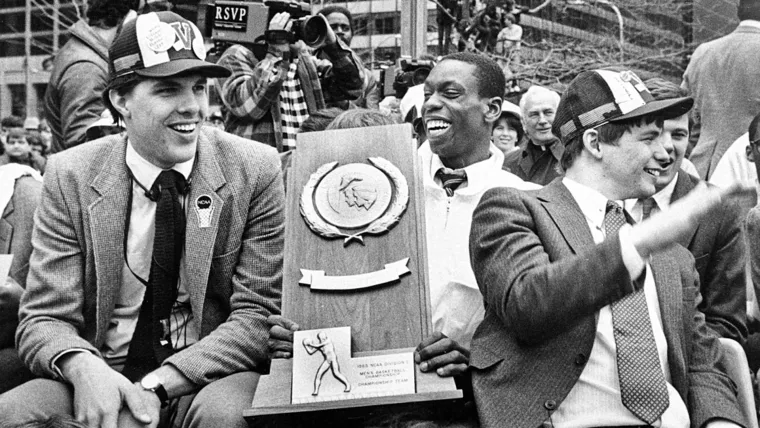
History provides a definitive, awe-inspiring answer: an 8-seed. In a monumental display of grit, strategy, and perfect execution, the 1985 Villanova Wildcats etched their name into the annals of sports history, becoming the lowest-seeded team to hoist the coveted national championship trophy. Their journey remains a beacon for every underdog team and a testament to the unpredictable, magical essence of March Madness.
Understanding March Madness Seeding: Why an 8-Seed is Remarkable
To truly appreciate the magnitude of Villanova’s 1985 achievement, it's essential to grasp the intricate seeding system of the NCAA Tournament. The 68 teams are divided into four geographical regions, with 16 teams in each. These teams are then ranked, or "seeded," from 1 (the highest) to 16 (the lowest), based on their regular-season performance, strength of schedule, and conference tournament results. Higher seeds are theoretically granted an easier path, facing lower-ranked opponents in the initial rounds.
Typically, the No. 1 seeds are considered the elite, the heavy favorites to reach the Final Four and contend for the title. No. 2 and No. 3 seeds are also strong contenders, often making deep runs. An 8-seed, however, falls squarely in the middle. These teams are considered solid, competitive programs, but they are rarely projected as championship material. They often face a challenging path, usually meeting a formidable No. 1 seed in the second round – a matchup that statistically favors the top seed significantly. This inherent disadvantage makes any deep run by an 8-seed a genuine upset, let alone a championship victory. For a deeper dive into the historical performance of these long shots, consider reading The Lowest Seed to Win March Madness: An 8-Seed's Historic Run.
The 1985 Villanova Wildcats: An Unlikely Contender
The 1984-85 Villanova Wildcats, coached by the legendary Rollie Massimino, entered the 1985 NCAA Tournament as an 8-seed in the West Region. Their regular season had been respectable but inconsistent, finishing with an overall record of 24-3. While they had secured 16 wins against teams that also qualified for the tournament, their performance wasn't screaming "national champion" to most pundits. They were a disciplined, well-coached squad, but certainly not a juggernaut in a landscape featuring dominant teams like defending champion Georgetown and formidable programs like St. John's.
Key to their success was a core of seasoned players, notably seniors Ed Pinckney, a dynamic forward, and Harold Pressley, a versatile guard. Pinckney, in particular, was the heart of the team, known for his defensive prowess, scoring ability, and leadership. While they were a cohesive unit, the national spotlight was firmly on the higher seeds, particularly the powerhouse Georgetown Hoyas, led by the iconic Patrick Ewing, who had crushed Villanova in their conference matchups that season.
Villanova's Historic Run: Conquering the Odds
The Wildcats' journey through the 1985 tournament was a masterclass in exceeding expectations, game by game. They didn't just win; they systematically dismantled higher-seeded teams with precision and an unwavering belief.
- Opening Rounds: Villanova started their campaign by defeating No. 9 seeded Dayton 51-49, a tight contest that foreshadowed the grit they would display. They followed this by beating No. 1 seeded Michigan 59-55, a significant early upset that proved they were not to be underestimated.
- Sweet Sixteen & Elite Eight: The upsets continued as they advanced. In the Sweet Sixteen, they faced No. 5 seeded Maryland, securing a 46-43 victory. Then, in the Elite Eight, they defeated No. 2 seeded North Carolina 56-44, demonstrating their ability to shut down high-powered offenses and play at their preferred slower tempo. Each win built momentum and confidence, proving that their methodical, often defensive-minded approach was effective against diverse opponents.
- Final Four Showdown: The path led them to the Final Four in Lexington, Kentucky, where they encountered their Big East rival, the No. 2 seeded St. John's Redmen. Despite a prior loss to St. John's during the regular season, Villanova emerged victorious with a commanding 67-59 win, setting the stage for one of the most iconic championship games in NCAA history.
The "Perfect Game" and the Championship Upset
The national championship game pitted the 8-seed Villanova Wildcats against the seemingly invincible No. 1 seed Georgetown Hoyas, the defending national champions. Georgetown, led by Patrick Ewing, had dominated the college basketball landscape and had already defeated Villanova twice that season by comfortable margins. The Hoyas were widely expected to repeat as champions, and few gave Villanova a fighting chance.
However, under Massimino's tactical genius and the team's relentless execution, Villanova played what many still refer to as the "Perfect Game." They shot an astonishing 78.6% from the field (22-for-28), a record for an NCAA championship game that still stands. They limited turnovers, played tenacious defense, and capitalized on virtually every scoring opportunity. Ed Pinckney was phenomenal, leading the charge and ultimately earning the tournament's Most Outstanding Player award, averaging 18 points per game during their postseason run.
In a contest that kept fans on the edge of their seats, Villanova managed to hold off Georgetown's late surge, securing a 66-64 victory. The image of the triumphant Wildcats, an 8-seed defying all odds, remains an indelible moment in sports history, a true testament to the spirit of March Madness. Their incredible journey from middle-of-the-pack to national champions is truly the ultimate From 8-Seed to Champion: The Ultimate March Madness Underdog Story.
The Enduring Legacy of the 1985 Wildcats and Practical Takeaways
The 1985 Villanova Wildcats did more than just win a championship; they redefined what was possible in March Madness. Their victory solidified the tournament's reputation for unpredictability and the power of the underdog. For decades, they stood alone as the lowest seed to ever win March Madness, a unique statistic that underscores the rarity and difficulty of their feat. While other low seeds have made deep runs, none have replicated the ultimate triumph from the 8th position.
Lessons for Modern Bracketology and Underdog Dreams:
- Momentum is Key: Villanova proved that a team peaking at the right time, with confidence building through each round, can overcome perceived talent gaps.
- Senior Leadership Matters: The veteran presence of Pinckney and Pressley was crucial. Experienced players often perform better under pressure.
- Tactical Masterclass: Coach Massimino's ability to devise a game plan that exploited opponents' weaknesses and maximized his team's strengths (like slowing the pace and executing high-percentage shots) was vital.
- Defense Wins Championships: While their offensive efficiency in the final was legendary, Villanova's consistent defensive effort throughout the tournament was a cornerstone of their success.
- Never Underestimate the "Middle Seeds": While 1-seeds and 2-seeds are strong, 5, 6, 7, and 8-seeds often have the talent and experience to pull off upsets if they catch fire. Don't dismiss them outright in your brackets.
The Wildcats' 1985 triumph serves as a powerful reminder that in March Madness, seeding is merely a suggestion, not a destiny. It's a tournament where talent, heart, strategy, and a little bit of luck converge to create moments of pure sporting magic. Every year, as Selection Sunday approaches, fans fill out their brackets, knowing that somewhere, another Villanova-esque Cinderella story might just be waiting to unfold.
Conclusion
The question, "What is the lowest seed to ever win March Madness?" finds its definitive answer in the unforgettable 1985 Villanova Wildcats. Their journey from an 8-seed to national champions remains a singular achievement, a testament to the fact that on any given night, any team can achieve greatness. Their "Perfect Game" against a dominant Georgetown squad solidified their legend and continues to inspire generations of basketball fans and underdog teams alike. It’s a powerful narrative woven into the fabric of college basketball, proving that in March Madness, hope springs eternal, and the impossible is always just one perfect game away.