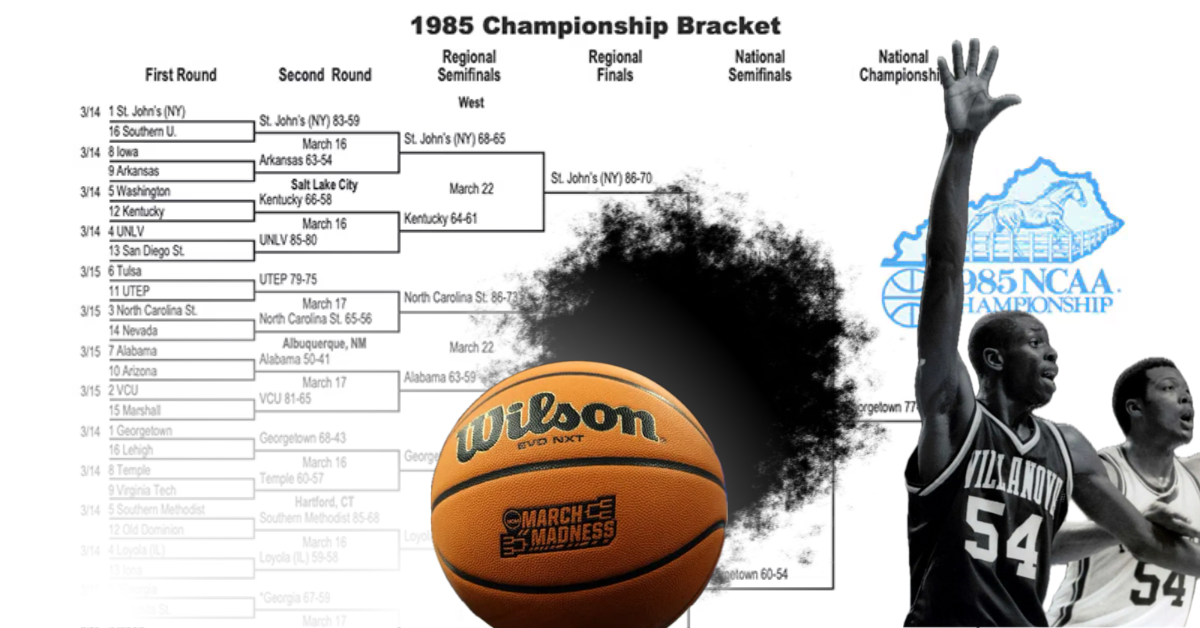
March Madness. The very name conjures images of buzzer-beaters, bracket busts, and the exhilarating rise of underdogs. Each spring, the NCAA Men’s Division I Basketball Tournament captivates millions, drawing them into a high-stakes, single-elimination spectacle where 68 teams vie for collegiate basketball's ultimate glory. While top seeds often dominate predictions, the tournament's magic lies in its unpredictability, leaving fans to ponder a compelling question: What is the lowest seed to ever win March Madness? History offers a definitive answer, a tale of unlikely triumph that epitomizes the "Cinderella story" and remains a benchmark for every underdog hopeful.
Understanding the March Madness Seeding System
Before diving into the deepest depths of tournament history, it's crucial to grasp how the seeding system works and why low-seeded champions are such a rarity. The NCAA Selection Committee meticulously seeds 68 teams across four regional brackets, typically from 1 (the strongest) to 16 (the weakest). This seeding aims to create a theoretically balanced path, pitting higher-ranked teams against lower-ranked ones in the early rounds.
- No. 1 Seeds: Consistently the strongest teams, often with national championship aspirations. They are theoretically granted the most "favorable" path to the later rounds, facing lower-ranked opponents initially.
- No. 2-4 Seeds: Strong contenders, usually conference champions or highly-regarded at-large bids. They are expected to make deep runs, but face increasingly tougher competition as the tournament progresses.
- No. 5-8 Seeds: Solid teams, often capable of upsets, but facing a tougher path than top seeds. An 8-seed, for instance, is typically slated to play a No. 1 seed in the second round if both advance, a formidable challenge indeed.
- No. 9-16 Seeds: Generally considered long shots, though 9-seeds often face 8-seeds in the first round, making them relatively evenly matched. Double-digit seeds pulling off upsets against top-four seeds are the quintessential "bracket busters" that define the early rounds of the tournament.
The system is designed to reward regular-season excellence and create competitive balance. Yet, March Madness proves repeatedly that a number next to a team's name is just that – a number. The immense pressure, the unforgiving single-game elimination format, and the sheer talent spread across Division I basketball create an environment ripe for the unexpected, where seeding plays a crucial role but does not always dictate success.
The Legendary 1985 Villanova Wildcats: An 8-Seed's Historic Ascent
The answer to the burning question, "What is the lowest seed to ever win March Madness?" takes us back to the inaugural year of the modern 64-team tournament format: 1985. It was in this pivotal year that the Villanova Wildcats, an 8-seed from the formidable Big East Conference, defied all odds to capture the national championship. Their run isn't just historic; it's legendary, setting a precedent for underdog glory that has yet to be matched.
Coached by the charismatic Rollie Massimino, the 1985 Wildcats entered the tournament with a respectable but not dominant 19-10 regular season record. They were a solid team, but certainly not a championship contender in the eyes of most, especially given the strength of their fellow Big East powerhouses like Georgetown and St. John's, who were both No. 1 seeds that year and considered heavy favorites to reach the Final Four.
Villanova's arduous path to glory began in the West Region, where they meticulously navigated through the bracket with a combination of defensive grit and timely offense:
- First Round vs. No. 9 Dayton (68-59): A hard-fought victory that showcased their defensive intensity from the outset, proving they were ready to battle in the crucible of tournament play.
- Second Round vs. No. 1 Michigan (59-55): A stunning upset over the heavily favored and highly-ranked Wolverines. This was an early, emphatic indicator that Villanova was no ordinary 8-seed and possessed the mettle to compete with the nation's best.
- Sweet Sixteen vs. No. 5 Maryland (46-43): Another tight, low-scoring contest, with the Wildcats emerging victorious, demonstrating their ability to win grind-it-out games when their shots weren't falling freely.
- Elite Eight vs. No. 2 North Carolina (56-44): A decisive win against a perennial powerhouse program led by legendary coach Dean Smith. This victory solidified their improbable trip to the Final Four and sent shockwaves through the college basketball world.
Their journey continued into the Final Four, held at the historic Rupp Arena in Lexington, Kentucky. Here, they faced another formidable opponent, No. 2 seed Memphis State (now Memphis). Villanova prevailed with a 52-45 victory, a masterclass in defensive lockdown, setting up a monumental national championship showdown against a familiar foe.
The "Perfect Game" Against Georgetown
The national championship game pitted Villanova against their fierce Big East rival, the defending national champion and overwhelming No. 1 overall seed, the Georgetown Hoyas. Led by the dominant center Patrick Ewing and coached by the stern John Thompson, Georgetown was a bona fide dynasty in the making, widely considered one of the greatest college basketball teams of all time. They had beaten Villanova twice convincingly during the regular season, reinforcing their favorite status. The betting odds for the final were heavily in Georgetown’s favor, making Villanova a massive underdog by any measure.
What transpired on April 1, 1985, is etched into March Madness lore as "The Perfect Game." Villanova played an almost flawless offensive game, shooting an astounding 78.6% from the field (22-of-28) – a championship game record that remarkably still stands today. Their defensive intensity matched their offensive efficiency, relentlessly hounding Georgetown's potent offense and forcing difficult shots. The Wildcats never wavered, maintaining their composure against a more talented and physically imposing opponent. In a truly breathtaking upset, Villanova triumphed 66-64, securing their first-ever NCAA title and cementing their place in history as Villanova's 1985 Triumph: The Unforgettable 8-Seed March Madness Title.
The team was spearheaded by senior guard Ed Pinckney, who was deservedly named the tournament's Most Outstanding Player, averaging an impressive 18 points per game during the postseason run. Along with fellow senior forward Harold Pressley, their veteran leadership, composure under pressure, and sheer will to win were instrumental in navigating the gauntlet of March Madness. From 8-Seed to Champion: The Ultimate March Madness Underdog Story, the 1985 Wildcats proved that impeccable execution and unwavering belief could absolutely overcome raw talent and higher seeding.
Why Villanova's 1985 Run Remains Unique
Since the 1985 tournament, countless low seeds have made inspiring deep runs, with several reaching the Final Four (e.g., No. 11 LSU in 1986, No. 11 George Mason in 2006, No. 11 VCU in 2011, No. 11 Loyola Chicago in 2018, No. 15 St. Peter's in 2022, and No. 9 Florida Atlantic in 2023). However, no other 8-seed, or any lower seed for that matter, has managed to win the national championship. This begs the question: what made Villanova's achievement so singularly special?
- Unprecedented Offensive Efficiency in the Final: Their 78.6% field goal percentage against one of the best defensive teams in college basketball history is not just a record; it's an anomaly that speaks to an almost supernatural level of focus and execution under the most intense pressure imaginable.
- Veteran Leadership and Composure: Pinckney and Pressley, both seniors, provided the calm and experienced presence needed to thrive in high-stakes tournament games. Senior-laden teams often have the mental toughness to navigate adversity and stay focused through multiple grueling contests.
- Defensive Prowess: While celebrated for their "perfect game" shooting, Villanova also played tenacious, suffocating defense throughout the entire tournament. They consistently held high-scoring opponents to well below their season averages, a crucial factor in every upset.
- Peaking at the Right Time: The Wildcats, despite an inconsistent regular season, managed to hit their collective stride precisely when it mattered most. Their cohesion, confidence, and execution improved significantly with each passing round, a hallmark of true championship teams.
- Familiarity with Opponents: Being in the same conference, Villanova knew Georgetown intimately, which might have provided a psychological edge and aided in game-planning, despite their regular-season losses to the Hoyas. This deep understanding allowed them to exploit subtle weaknesses.
The Enduring Impact of Underdog Champions and How to Spot Them
Villanova's 1985 victory forever altered the perception of March Madness seeding. It proved definitively that while seeding provides an initial roadmap, it doesn't guarantee the destination. This "Cinderella effect" is what makes the tournament so compelling year after year, fueling the hopes of millions of bracketologists and casual fans alike. It’s the ultimate validation of the idea that on any given day, any team can win.
So, how can you identify a potential low-seed champion or a deep-run underdog in future tournaments? While another 8-seed champion might be a once-in-a-generation occurrence, here are some characteristics often found in successful low seeds that could make a significant impact:
- Senior-Dominated Rosters: Experience and maturity are invaluable in high-pressure tournament games. Teams with multiple senior starters tend to handle adversity better, avoid panic, and execute under duress.
- Elite Coaching: A masterful coach who can strategize, motivate, and make crucial in-game adjustments can elevate a team beyond its perceived talent level. Rollie Massimino was a prime example, preparing his team meticulously for the biggest game of their lives.
- Strong Defensive Identity: "Defense travels" is a common basketball adage, and it's especially true in March Madness. Teams that can consistently get stops, force turnovers, and limit opponent scoring opportunities have a higher ceiling for upsets.
- Efficient Offense (especially free throws): While Villanova's shooting was historic, simply being efficient, limiting turnovers, taking good shots, and hitting free throws down the stretch can be the difference in close, single-elimination games.
- Peaking at the Right Time: Look for teams that finished their regular season or conference tournament with strong momentum, suggesting they've found their rhythm, chemistry, and confidence just before the big dance.
- Unique Matchup Advantages: Sometimes a lower-seeded team possesses a specific skill set (e.g., exceptional three-point shooting, a dominant interior player, a stifling zone defense, or incredible athleticism) that poses a particular, exploitable challenge for higher-seeded opponents.
While the odds remain stacked against low seeds, the spirit of the 1985 Wildcats lives on, reminding everyone that in March Madness, anything is possible. Their legacy inspires every team that hears its name called on Selection Sunday, regardless of the number next to it.
The question, "What is the lowest seed to ever win March Madness?" finds its answer in a single, unforgettable season: the 1985 Villanova Wildcats. Their journey from an overlooked 8-seed to national champions is more than just a statistical anomaly; it's a timeless testament to resilience, teamwork, and the inherent magic of college basketball's greatest tournament. While decades have passed without another 8-seed matching their feat, Villanova's historic run continues to inspire, solidifying its place as the ultimate Cinderella story and a permanent beacon of hope for every underdog dreaming of cutting down the nets. The legend of '85 ensures that every March, we all dare to believe that another improbable champion might just be waiting in the wings.